


Water Footprint Calculation: Process, Importance, and Applications in Industry
Water Footprint is an indicator that shows how much water is consumed to produce a product, carry out an activity, or support people’s daily lives. This concept goes beyond drinking water and considers all water resources, including surface water, groundwater, and rainwater, throughout the entire life cycle of a product or service.
Water is the most vital resource on Earth. However, population growth and industrial development have placed increasing pressure on water resources. In such circumstances, the concept of Water Footprint has emerged as an important tool for measuring and managing water consumption. It helps us understand how much water is consumed behind the production of every product or the delivery of every service.
From a cup of coffee to steel production and agricultural products, almost every activity depends on water. Understanding and calculating the Water Footprint enables organizations and communities to gain greater insight into consumption patterns, identify areas of waste, and move toward sustainable development. In simple terms, Water Footprint is a bridge between resource management, environmental responsibility, and a sustainable future for people and nature.
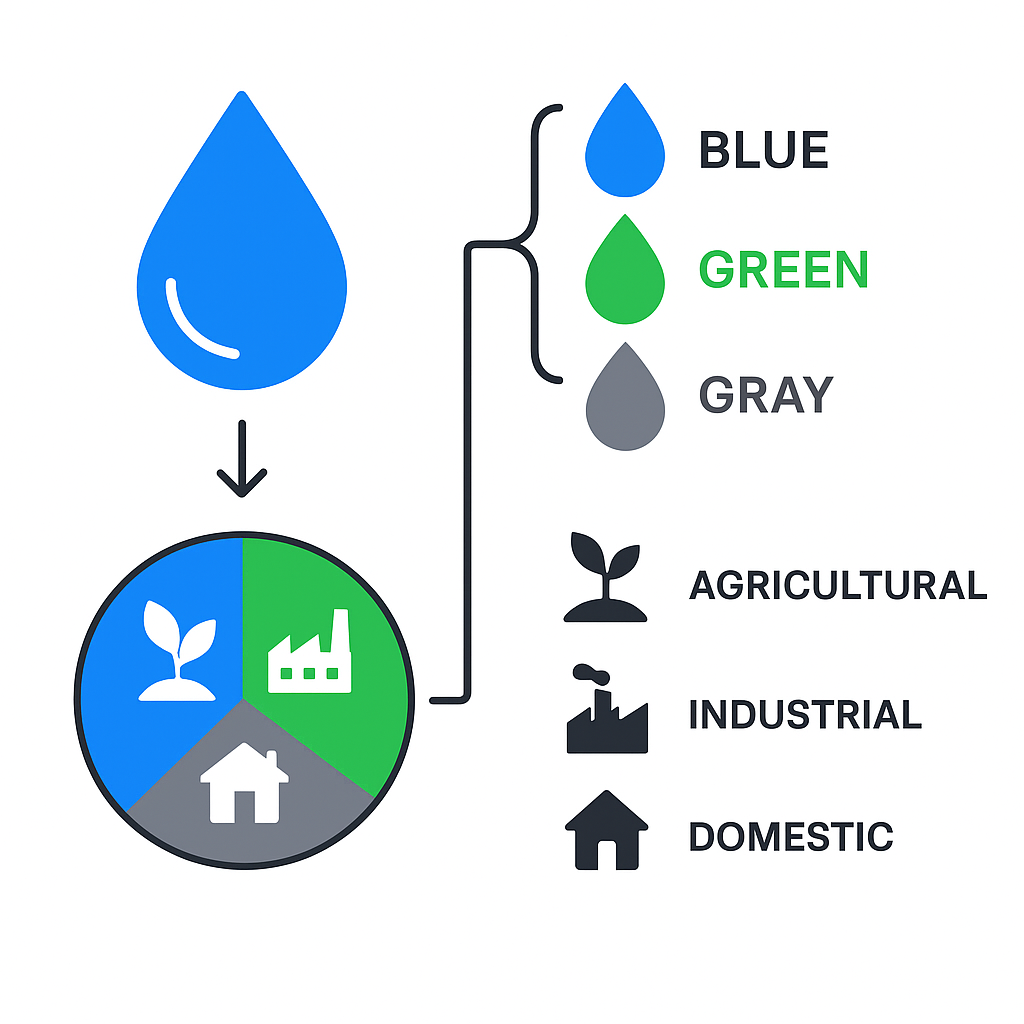
Water Categories
- Blue Water: Water withdrawn from surface water and groundwater sources.
- Green Water: Rainwater stored in the soil and used by plants, particularly in agricultural processes.
- Grey Water: The volume of freshwater required to dilute pollutants and restore water quality to an acceptable level.
Why Is Water Footprint Calculation Important?
At a time when many countries are facing water scarcity, Water Footprint calculation has become an essential practice for industries and organizations. It helps them to:
- Identify and quantify their actual water consumption.
- Understand their impact on water resources.
- Develop strategies to reduce consumption and improve water resource management.
- Comply with environmental requirements and international standards.
Stages of Water Footprint Calculation in Industry
1. Collecting Water Consumption Data
At this stage, information about water consumption across different activities and operational areas is collected, including:
- Industrial production, such as steel, chemicals, textiles, and food industries
- Agricultural irrigation
- Public and service activities such as hotels and restaurants
2. Identifying the Water Sources Used
The sources from which water is obtained are identified, including:
- Surface water, such as rivers and lakes
- Groundwater, including wells and aquifers
- Rainwater
3. Applying Water Consumption Factors
Standardized data and water consumption factors are used to perform an accurate calculation. Examples include:
- The amount of water required to produce one kilogram of steel
- The amount of water required to produce one kilogram of wheat
- The amount of water consumed by power plants to generate electricity
4. Calculating the Total Water Footprint
Finally, the Blue, Green, and Grey Water Footprints are calculated and combined to determine the overall Water Footprint of an organization, product, or activity.
Importance of Water Footprint in Different Industries
Reducing Environmental Impacts
By identifying actual water consumption, industries can reduce environmental impacts and relieve pressure on water resources, particularly in water-stressed and arid regions.
Reducing Costs
Lower water consumption can lead to lower production and operational costs, particularly in water-intensive sectors such as agriculture and energy-related industries.
Compliance with Laws and Standards
The international standard ISO 14046 specifically addresses Water Footprint assessment and provides a framework for organizations to evaluate and report the environmental impacts associated with water.
Applications of Water Footprint Calculation
- Agriculture: Identifying water-intensive crops and replacing them with varieties that require less water.
- Textile Industry: Managing water consumption in processes such as dyeing and washing.
- Food Industry: Calculating water consumption throughout the production chain of meat, dairy products, and agricultural products.
- Service Companies: Reducing water consumption in hotels, restaurants, accommodation facilities, and other service organizations.
The Role of the Iran Green Management Association in Water Footprint Management
Iran Green Management Association can support organizations in the field of Water Footprint management through specialized educational and consulting services. These services include:
- Training in Water Footprint calculation and reporting
- Providing specialized consulting for reducing water consumption
- Supporting organizations in implementing sustainable water management practices
- Providing green certification services for sustainable industries
Water Is More Than a Resource; It Is a Responsibility
Water is not merely a resource for production and consumption. It is a shared environmental responsibility that requires accurate measurement, responsible management, and long-term planning.
Calculating the Water Footprint enables organizations to understand their dependence on water resources, identify opportunities for improvement, reduce environmental impacts, and take meaningful steps toward a more sustainable future.
For organizations seeking to improve resource efficiency and strengthen their sustainability performance, Water Footprint assessment can be an important step toward smarter and more responsible resource management.
Water is not just a resource; it is a human responsibility.