



The EAST Model and Its Role in Evaluating Green Projects on the Path to Sustainable Development
In today’s world, moving toward sustainable development and reducing the harmful environmental impacts of human activities have become major priorities for organizations, governments, and international institutions. In this context, a Green Project is not only a tool for protecting natural resources and reducing pollution, but also an important factor in enhancing economic efficiency, social responsibility, and technological innovation.
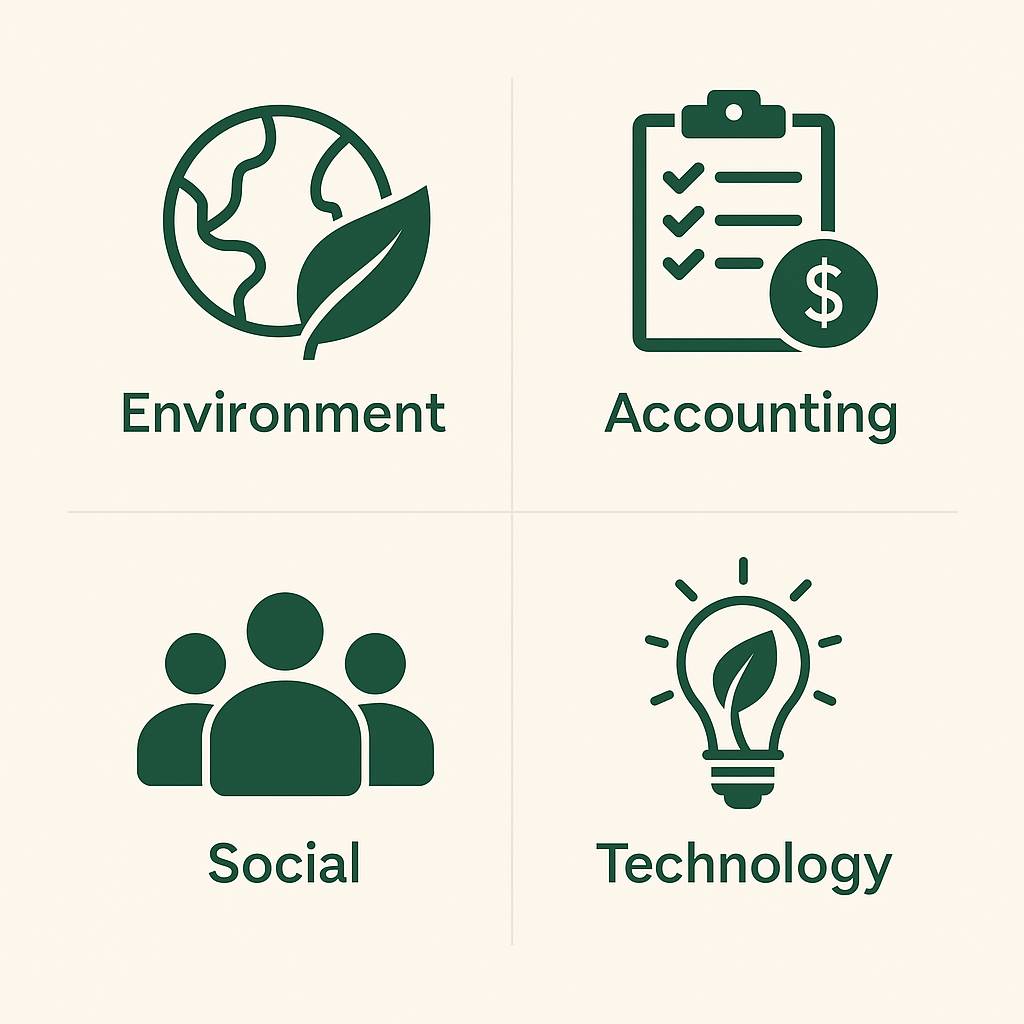
To evaluate the success of such projects, a comprehensive and reliable framework is required. The EAST Model is one of the recognized global approaches to evaluation, developed by the GG Network, and used as an international framework for assessing project performance across four dimensions: Environment, Accounting, Social, and Technology.
Environment
One of the most important aspects of evaluating a Green Project is assessing its impact on the environment. This dimension of the EAST Model focuses on identifying and analyzing environmental impacts before and after project implementation.
Key activities in this area include:
-
Assessing the initial environmental conditions, including air, water, and soil quality, as well as the amount of waste generated.
-
Analyzing changes in energy and natural resource consumption after project implementation.
-
Evaluating the project’s impact on reducing greenhouse gas emissions and addressing climate change.
-
Documenting environmental results and achievements and providing recognized certifications.
This dimension of the EAST Model enables organizations to evaluate the effectiveness of their projects on the natural environment and identify areas for improvement.
Accounting and Economics
The economic dimension is one of the key pillars of the success of any Green Project. By focusing on this area, the EAST Model enables organizations to conduct a detailed analysis of costs, investments, and financial benefits.
Key activities in this area include:
-
Analyzing the financial situation before project initiation and estimating the required investments.
-
Calculating implementation and maintenance costs throughout the project life cycle.
-
Evaluating the economic benefits of project implementation, including reduced operating costs, energy savings, and improved return on investment (ROI).
-
Comparing economic data with similar projects at national and international levels as a benchmark for competitiveness.
This section of the EAST Model helps decision-makers manage their projects from a comprehensive financial and economic perspective and improve their overall returns.
Social
Every Green Project has significant impacts not only on the environment and economy but also on society and stakeholders. By considering this dimension, the EAST Model helps organizations evaluate and document the social impacts of their projects.
Key activities in this area include:
-
Analyzing the initial social conditions and the project’s impact on community health, safety, and well-being before implementation.
-
Assessing social impacts on employees, residents, and other stakeholders.
-
Documenting and reporting social outcomes after project implementation, including improved safety, better working conditions, and enhanced organizational social responsibility.
-
Providing national and international examples for benchmarking the project’s social performance.
This dimension helps managers design projects that are not only environmentally and economically successful but also create positive impacts for society and stakeholders.
Technology
The development of innovative technologies is one of the key pillars for achieving sustainable objectives in a Green Project. In the EAST Model, this dimension focuses on evaluating the level of innovation, efficiency, and compatibility of the technologies used.
Key activities in this area include:
-
Comparing the technologies used in the project with traditional methods in terms of efficiency and environmental compatibility.
-
Assessing the level of smart technology adoption, digitalization, and the use of emerging technologies in project management.
-
Providing technical documentation, including reports, certifications, images, and international comparative studies.
Green and smart technologies can have a significant impact on reducing resource consumption, optimizing processes, and minimizing pollution, thereby increasing the likelihood of project success.
Benefits of Applying the EAST Model to Green Projects
Implementing the EAST Model in project evaluation and implementation provides numerous benefits for organizations and investors:
-
Increasing the international credibility of projects and facilitating the acquisition of green certifications.
-
Attracting domestic and international investment through greater transparency and standardized reporting.
-
Enhancing the organization’s position in competitive markets and increasing stakeholder trust.
-
Facilitating managerial decision-making through comprehensive environmental, economic, social, and technological analysis.
Applying this model not only helps improve project quality but also paves the way toward sustainable development.
The Role of the EAST Model in the Future of Green Projects
Given the rapid pace of climate change, population growth, and limitations on natural resources, the need for comprehensive evaluation frameworks is greater than ever. The EAST Model, as a strategic tool, enables organizations to manage their projects in a multidimensional and scientific manner, thereby maximizing the effectiveness of their environmental, economic, and social initiatives.
Ultimately, applying this model can lead to the development of projects that are not only environmentally responsible but also economically profitable, socially impactful, and technologically advanced.
Checklist: EAST Checklist for Green Project