



Corporate Social Responsibility (CSR); A New Path Toward Sustainable Development
Corporate Social Responsibility (CSR) has emerged as one of the most important organizational governance strategies in the modern business era. It not only strengthens brand positioning but also plays a fundamental role in sustainable development, increasing stakeholder trust, and improving quality of life. In today’s business environment, organizational success is no longer dependent solely on profitability and economic growth. Within this framework, CSR, or Corporate Social Responsibility, is defined as a set of policies, actions, and strategies aimed at creating shared value for the organization, society, and the environment.
Leading organizations at the national and international levels have recognized that Corporate Social Responsibility is no longer an optional choice, but a strategic necessity for ensuring organizational survival and competitiveness. By integrating ethical, social, and environmental values into the business model, CSR enables organizations to achieve their financial objectives while fulfilling their responsibilities toward society.
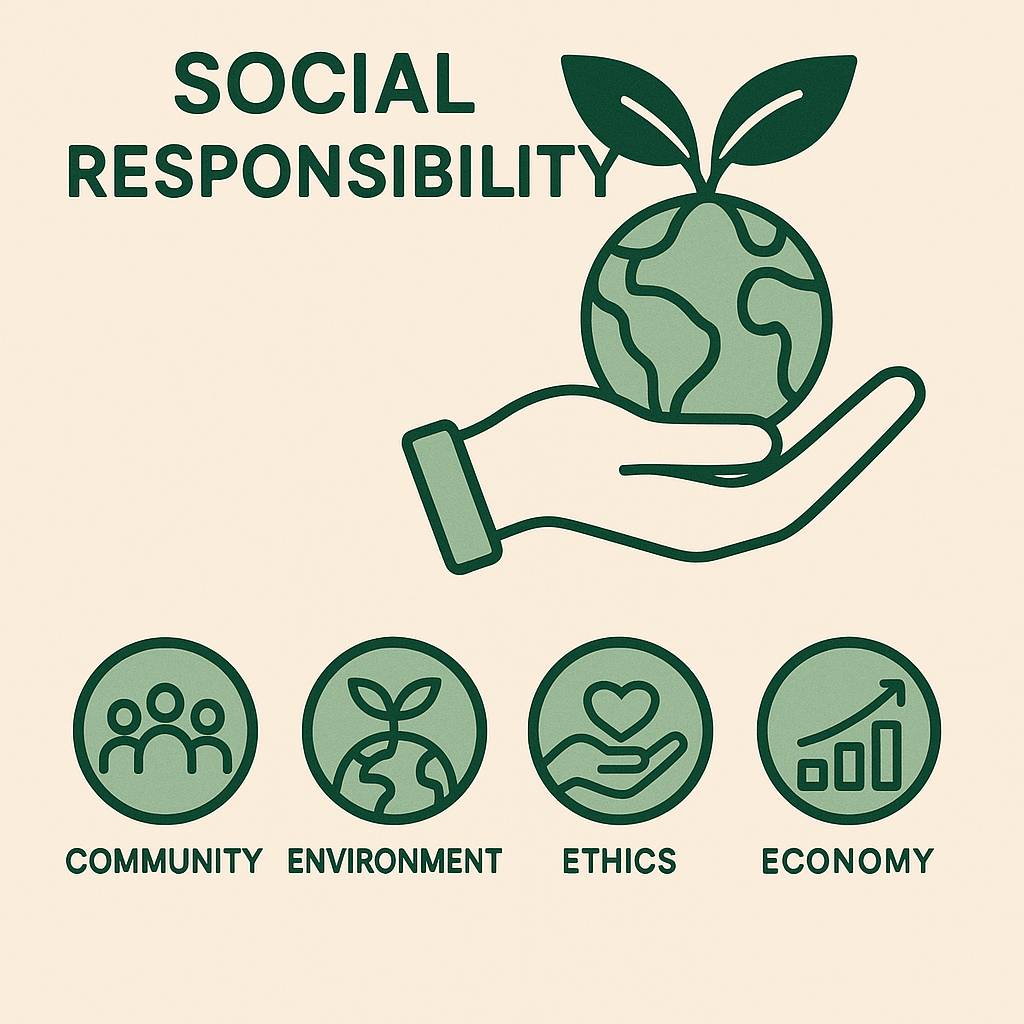
Key Dimensions of Corporate Social Responsibility
Based on international frameworks, including the CSR Award model, corporate social responsibility consists of three main dimensions, each of which plays an independent role in evaluating organizational performance and, collectively, provides a comprehensive picture of a company’s social impact:
1. Social Dimension
The social dimension of CSR focuses on the impact of organizational activities on society, employees, and stakeholders. This dimension includes programs and initiatives that contribute to public well-being and improve human interactions. The most important indicators include:
-
Strengthening the organization’s image and reputation as a responsible and committed member of society.
-
Increasing customer satisfaction and loyalty through value-based and ethical services.
-
Developing effective relationships with stakeholders and reducing social conflicts.
-
Enhancing the organization’s position through receiving reputable awards, recognitions, and certifications.
These actions directly contribute to increasing social capital and improving the organization’s position within the economic and social ecosystem.
2. Economic Dimension
The economic dimension of Corporate Social Responsibility focuses on creating sustainable financial and economic value for the organization and its stakeholders. Contrary to the traditional perception that CSR is merely a cost, studies indicate that effective implementation of this approach can lead to revenue growth, cost reduction, and the creation of competitive advantages. Key indicators of this dimension include:
-
Increasing sales and profitability through improved brand image and customer trust.
-
Reducing social and environmental costs through the prevention of damage and crises.
-
Strengthening brand value and commercial positioning in competitive markets.
-
Optimizing the supply chain through a responsible and sustainable approach.
In fact, CSR in the economic dimension is not merely an additional cost; rather, it is a tool for increasing return on investment and attracting green investors.
3. Environmental Dimension
In today’s world, the role of organizations in reducing environmental impacts has become more important than ever. The environmental dimension of Corporate Social Responsibility includes organizational policies and actions aimed at protecting the environment and using natural resources efficiently.
Some of the most important areas of this dimension include:
-
Developing a green supply chain and selecting sustainable suppliers.
-
Reducing pollution and optimizing the consumption of resources such as water and energy.
-
Enhancing transparency in environmental reporting and disclosing the organization’s environmental performance.
These actions not only reduce environmental risks but also play an important role in aligning organizations with global standards and legal requirements.
Key Criteria for Evaluating Corporate Social Responsibility
Evaluating the effectiveness of CSR requires accurate and measurable indicators. Internationally recognized models and the criteria developed by the Iran Green Management Association identify three main dimensions for measuring the maturity level of corporate social responsibility:
-
Transparency (35%): The extent of reporting and public access to the organization’s social, economic, and environmental information.
-
Training and Awareness (20%): Developing skills and increasing the awareness of employees and stakeholders regarding CSR objectives.
-
Continuous Improvement (45%): The organization’s ability to continuously improve its processes and achieve better results in the field of social responsibility.
Combining these criteria helps organizations accurately evaluate and optimize their strategies.
Benefits of Implementing CSR in Organizations
Strategic implementation of Corporate Social Responsibility, beyond being an ethical obligation, is a tool for organizational growth and development at both national and international levels. Its most important benefits include:
-
Increasing social capital and enhancing public trust in the brand.
-
Improving organizational culture and increasing employee motivation and productivity.
-
Reducing social, legal, and environmental risks.
-
Strengthening competitive positioning in domestic and international markets.
-
Facilitating the acquisition of international CSR certifications and standards.
The Role of Corporate Social Responsibility in the Future of Organizations
Looking ahead, successful organizations will be those that place CSR at the heart of their strategies and view it not merely as a supplementary initiative, but as an integral part of their business model. Integrating social responsibility with innovation, technology, and sustainable business models can transform organizations into leaders of change on the path toward sustainable development.
Checklist: CSR Model