



Green Cafe; A New Path Toward Urban Sustainability in Tehran
From the Cafe Culture Boom to the Need for Sustainability
In recent years, Tehran and many other cities across Iran have witnessed a significant growth in cafes and restaurants.
Every day, new cafes open in the city’s streets and neighborhoods, providing spaces for conversation, work, study, or simply a moment of relaxation.
This trend may appear to be a sign of the city’s cultural and social dynamism, but beneath the surface lies a growing challenge:
increased consumption of natural resources, waste generation, and environmental pollution.
Every cup of coffee, every dish washed, and every hour of lighting, cooling, or heating in a cafe consumes a portion of the city’s limited resources.
As the number of cafes increases, the combined impact of this consumption can become a serious threat to urban sustainability and environmental health.
Therefore, cafes can no longer be viewed merely as cultural or recreational spaces; in practice, they are small units of energy consumption and urban waste generation.
The Emergence of the “Green Cafe” Concept
In response to this challenge, a new concept has emerged: the Green Cafe.
A Green Cafe is a place that, in addition to serving high-quality coffee and providing an enjoyable atmosphere, focuses on smart resource management, pollution reduction, and sustainable behavior education.
In such a cafe, every decision — from selecting suppliers and raw materials to service methods and space design — is made with consideration for its environmental impacts.
A Green Cafe is not merely a new trend; it is a necessary response to the urban consumption crisis.
In a world where resources are limited, enjoying the moment while respecting the planet can become part of a responsible culture of citizenship.
Why Going Green Is a Necessity, Not a Choice
1. Increasing Urban Consumption and Pollution
The uncontrolled growth of cafes without adherence to green principles can multiply energy and water consumption as well as waste generation.
From disposable cups to continuous dishwashing and the use of heating and cooling systems, all of these activities contribute to urban pollution.
Implementing a green model can reduce this consumption by up to 30% while also lowering the cafe’s operating costs.
2. Changing Customer Behavior and Awareness
A new generation of urban customers, particularly young people, places significant importance on sustainability and corporate social responsibility.
They prefer cafes that reflect their values — places that are not only enjoyable but also socially and environmentally responsible.
Cafes that fail to adopt green principles will gradually fall behind in this competitive market.
3. Reducing Costs and Increasing Efficiency
A Green Cafe is not merely an advertising slogan.
This model is based on scientific analysis of resource consumption, meaning the examination of energy, water, and material flows from the moment a customer enters the cafe until they leave.
Through employee training and improvements in space design, resource waste can be minimized.
The result is lower monthly operating costs and increased operational profitability for the cafe.
4. Enhancing Brand Reputation and Value
Cafes that move toward becoming greener are recognized by society as responsible and forward-thinking brands.
This reputation not only attracts new customers but also creates emotional loyalty among existing customers — something that is essential for business sustainability.
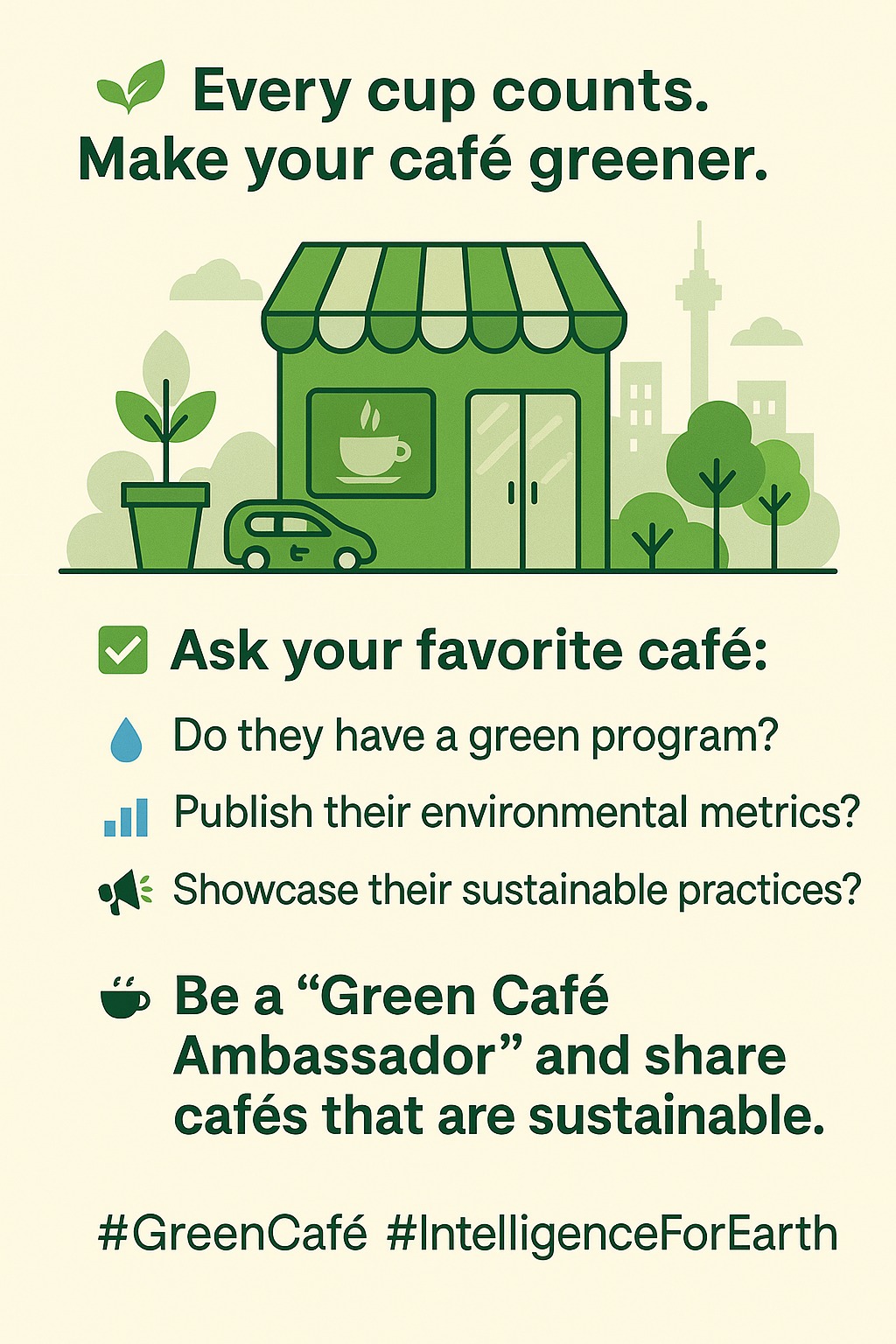
The Role of Customers in the Success of a Green Cafe
The success of a Green Cafe does not depend solely on the decisions of its managers or employees; customers are also partners in the greening process.
Simple yet effective participatory behaviors can have a significant impact, such as:
-
Using a personal mug instead of disposable cups.
-
Sorting waste at the cafe.
-
Conscious ordering and avoiding unnecessary waste.
-
Participating in the cafe’s cultural and environmental programs.
Through these actions, customers move from being ordinary consumers to becoming partners of the green brand, developing a stronger sense of belonging to the space.
Implementation Steps for Turning a Cafe Green
Step One: Establishing a “Green Intelligence” Task Force
To effectively implement green policies, each cafe should establish a small but active team responsible for reviewing ideas, collecting data, and implementing decisions.
Steps for Establishing the Green Intelligence Task Force:
-
Identifying key personnel from different departments, including management, service area, kitchen, procurement, and cleaning.
-
Issuing an official appointment letter or mandate for team members.
-
Holding the first short and informal meeting to introduce the objectives and discuss current challenges.
-
Developing a task force charter covering objectives, values, responsibilities, and success indicators.
-
Defining rewards or incentives for members upon achieving resource-consumption reduction targets.
This task force serves as the starting point for smart management and sustainability within the cafe environment.
Download the Guidebook: Green Cafe