



Green Bank; A Solution for Sustainability and Economic Development
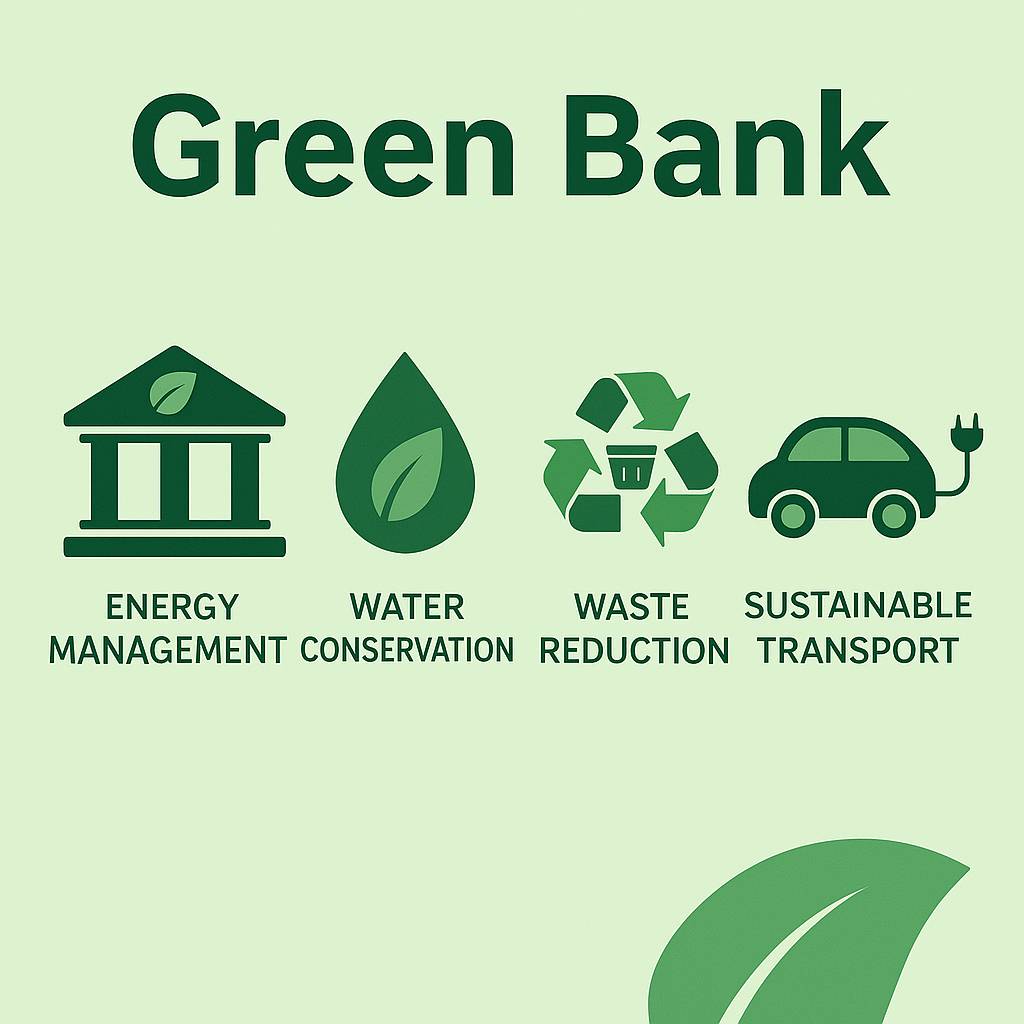
In today’s world, where climate change, resource scarcity, and increasing environmental pollution have become serious global challenges, the role of various industries in reducing adverse environmental impacts has received more attention than ever. One of the sectors that can play a significant role in achieving sustainable development is the banking industry. The concept of Green Bank, as a modern model in the financial system, focuses on reducing the consumption of energy, water, paper, and waste while providing a comprehensive approach to enhancing the social and economic responsibility of banks.
Banks are not merely financial intermediaries; given their numerous branches, employees, equipment, and extensive customer networks, they have both direct and indirect impacts on the environment. Therefore, moving toward green banking is not merely an option, but an inevitable necessity.
Key Indicators of a Green Bank
1. Energy Management
Due to their numerous branches and various electronic equipment, banks are major consumers of electricity. Therefore, energy management holds a special position in green banking:
-
Continuous monitoring and analysis of electricity consumption in branches and units.
-
Replacing outdated equipment with energy-efficient systems equipped with energy labels.
-
Using renewable energy sources such as solar panels in buildings.
-
Optimizing ventilation, cooling, and heating through smart systems.
-
Recovering energy from existing equipment and processes.
These measures help reduce operational costs as well as greenhouse gas emissions.
2. Water Consumption Optimization
Water, as one of the most vital resources, plays a key role in sustainability. Green banks can serve as a model for responsible water consumption through the following measures:
-
Installing smart meters and monitoring consumption in each section.
-
Using water-efficient faucets and dual-flush toilets.
-
Designing climate-adapted green spaces and using drip irrigation systems.
-
Collecting and reusing rainwater and treated wastewater.
These measures not only conserve natural resources but also send a clear message to society about the importance of water conservation.
3. Waste Management
Proper waste management is one of the fundamental principles of a green bank. In this regard:
-
Waste is separated according to type, including paper, metal, glass, organic waste, and electronic waste.
-
A culture of waste reduction is promoted through targeted purchasing and responsible consumption.
-
Used electronic equipment and office supplies are recycled or refurbished.
-
Surplus food from bank restaurants or cafeterias is donated to charitable organizations.
In addition to reducing costs, these measures create a positive image of the organization in the minds of customers.
4. Green Procurement and Supply
Another key pillar of a green bank is purchasing and supplying environmentally friendly equipment and products:
-
Selecting local and recyclable products.
-
Purchasing equipment with green energy labels such as Energy Star.
-
Avoiding single-use products.
-
Managing inventory and supplies to prevent resource waste.
This approach contributes to a sustainable supply chain and demonstrates the organization’s commitment to environmental protection.
5. Paper and Office Space
Since banks are major consumers of paper, moving toward paperless offices is highly important:
-
Using digital document management systems instead of paper files.
-
Double-sided printing and using recycled paper.
-
Reducing color printing, which has greater environmental impacts.
-
Training employees on efficient paper use.
These measures not only help protect forests but also reduce administrative costs.
6. Green Transportation
Employee and customer transportation also contributes significantly to carbon emissions. In a green bank:
-
Carpooling programs and the use of public transportation are promoted.
-
Business trips are replaced with video conferencing whenever possible.
-
The use of electric and hybrid vehicles in the bank’s fleet is increased.
-
Bicycle routes and secure parking facilities are provided for employees.
In addition to reducing pollution, these policies contribute to improving employee health.
7. Reducing Noise and Air Pollution
A healthy workplace has a direct impact on productivity. To achieve this:
-
Sound insulation is installed in buildings.
-
Appropriate ventilation systems are used to improve indoor air quality.
-
Energy-intensive and polluting equipment is replaced with greener alternatives.
-
Continuous monitoring of pollutants and reduction of greenhouse gas emission sources are carried out.
Benefits of Green Banking for Organizations and Customers
Implementing a green approach in banking offers numerous benefits for organizations and society:
-
Reducing operational costs through better management of energy and resources.
-
Enhancing the brand and creating a positive image in society.
-
Aligning with international environmental standards and regulations.
-
Increasing customer trust in sustainable and responsible services.
-
Playing an effective role in sustainable development and reducing environmental impacts.
Moving toward green banking is not merely a voluntary choice; it is a necessity for a sustainable and responsible future. Banks that choose this path will not only help reduce environmental impacts but will also strengthen their economic and social position. The future of the banking industry belongs to organizations that place environmental and social responsibility alongside financial profitability at the core of their activities.
Checklist: Green Bank