


Green Information Technology (Green IT) for Sustainable Development
Green Information Technology (Green IT) is one of the emerging approaches in today’s world, focusing on reducing the environmental impacts of information technology. In a world where energy consumption in data centers, electronic waste generation, and greenhouse gas emissions are continuously increasing, organizations can no longer remain indifferent to their environmental impacts. Green IT provides a smart approach to balancing technological development with environmental protection. This approach not only helps reduce costs and improve efficiency but also represents an important step toward achieving sustainable development.
What Is Green IT?
Green Information Technology, or Green IT, refers to a set of policies, processes, and technological solutions designed to achieve efficient resource management, pollution reduction, and improved energy efficiency. Under this approach, all stages of the IT equipment life cycle—from design and manufacturing to use and final disposal—are aligned with environmental principles.
Examples of Green IT include the use of energy-efficient hardware, environmentally friendly data center design, promoting paperless work practices, and developing optimized software. Green IT is no longer an optional choice; it has become a necessity for organizations seeking to compete globally and fulfill their social responsibilities.
The Importance of Green IT in Sustainable Development
Today, information technology plays a vital role in the economic, social, and cultural development of societies. However, this growing role can become a threat if environmental challenges are ignored. Some of the key reasons for the importance of Green IT include:
- High energy consumption in data centers and servers.
- The increasing volume of electronic waste and the challenges associated with recycling it.
- Greenhouse gas emissions resulting from IT equipment.
- Significant costs caused by inefficient consumption of energy and resources.
Therefore, moving toward Green IT is considered a strategic action for organizations. Green IT not only reduces negative environmental impacts but also improves productivity, lowers costs, and enhances an organization’s brand and reputation at both national and international levels.
Principles and Criteria of Green Information Technology
1. Green Management and Leadership
The success of any organization in implementing Green IT depends first and foremost on sustainable management and leadership. Leaders of information and communication technology units play an important role in establishing organizational values and culture. Key criteria in this area include:
- Reviewing the organization’s mission, values, and ethical principles from a green perspective.
- Protecting company and employee information in line with organizational sustainability.
- Supporting the implementation of green management systems and processes.
- Active participation of managers in environmental training and activities.
- Strengthening stakeholder relationships and selecting suppliers based on green criteria.
- Addressing environmental changes and prioritizing actions to overcome environmental challenges.
2. Green Resources and Equipment
IT infrastructure is the heartbeat of an organization. To achieve Green IT, resources and equipment should be selected and managed according to green criteria.
- Using energy-efficient hardware that complies with international standards such as Energy Star.
- Utilizing clean and renewable energy sources in data centers.
- Extending equipment life through timely maintenance and repair.
- Reusing and safely recycling obsolete equipment.
- Applying HSE principles when disposing of electronic equipment.
These measures help reduce pollution resulting from greenhouse gas emissions and electronic waste.
3. Human Resources and Training
No program can succeed without the active participation of human resources. Employees play a key role in transforming organizational culture.
- Developing human resource empowerment strategies to achieve green objectives.
- Establishing green creativity and innovation systems within IT departments.
- Creating incentive and reward systems for environmentally responsible behaviors.
- Training employees in energy efficiency, digital tools, and paper reduction.
- Supporting employees’ physical and psychological well-being and reducing occupational risks.
These measures not only improve productivity but also strengthen employees’ sense of belonging to the organization’s green values.
4. Green Processes and Services
Organizational processes in the field of information technology should be redesigned in accordance with Green IT principles. Some of the key criteria in this area include:
- Identifying and designing processes based on environmental standards such as ISO 14001.
- Implementing life-cycle management for IT equipment.
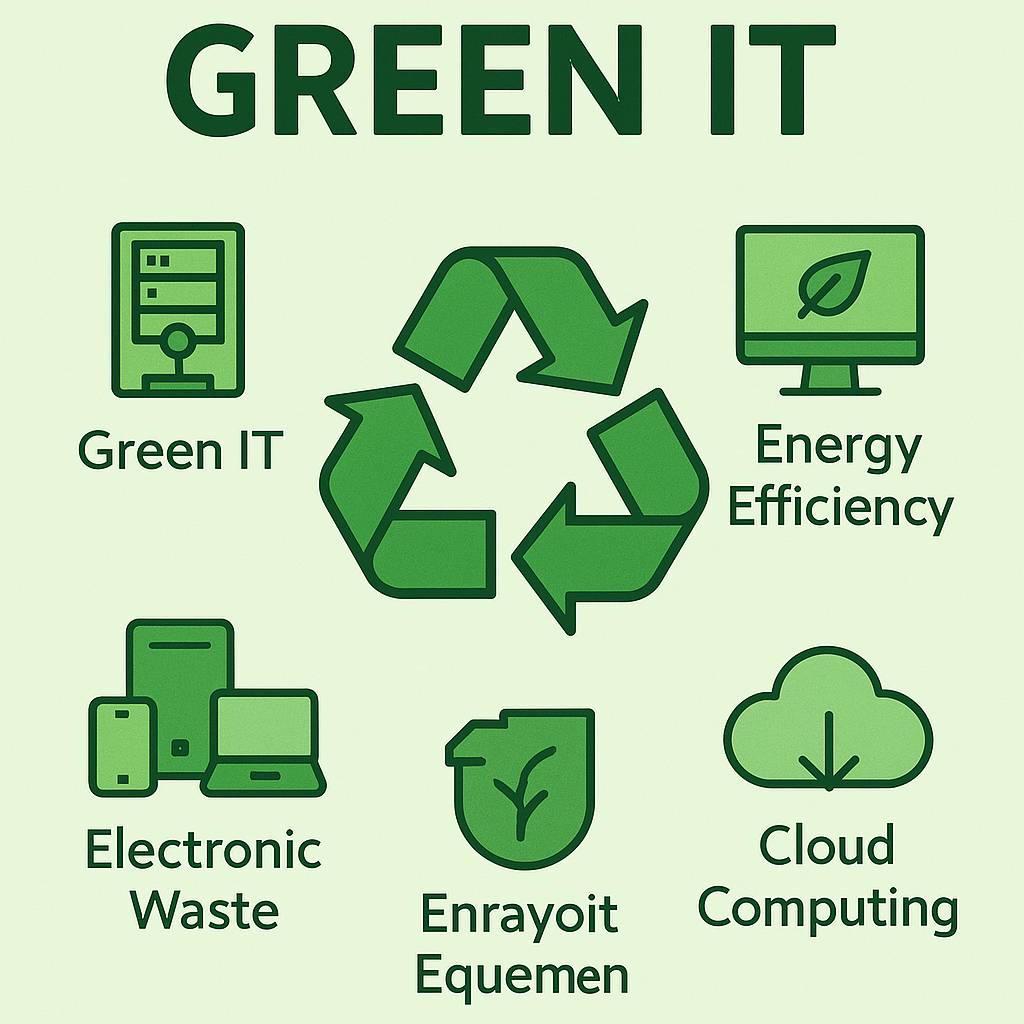
- Using Cloud Computing and Virtualization to reduce energy consumption.
- Eliminating duplication and optimizing processes through a green approach.
- Improving the quality of IT services from the customers’ perspective while minimizing environmental impacts.
- Maintaining active engagement with regulatory institutions as part of social responsibility.
These approaches help organizations move toward sustainable development and responsible competition.
5. Investment and Economic Benefits
One common misconception about Green IT is that it is expensive. In reality, investment in Green IT can generate significant financial benefits:
- Reducing energy costs through the use of energy-efficient equipment.
- Reducing infrastructure maintenance and repair costs.
- Extending the useful life of equipment and reducing depreciation.
- Preventing losses resulting from environmental incidents.
- Enhancing brand reputation and increasing revenue through environmentally responsible practices.
In fact, Green IT combines economic efficiency and social responsibility.
Effective Everyday Actions
Implementing Green IT is not limited to strategic and organizational decisions. Simple everyday actions can also make a significant difference:
- Turning off unused devices at the end of working hours.
- Using laptops instead of energy-intensive desktop computers.
- Reducing paper consumption through double-sided printing and digital document management systems.
- Safely recycling electronic and digital waste.
- Using video conferencing instead of business travel.
- Optimizing data center temperature through passive cooling methods.
These small actions, when implemented across an organization, can have a significant impact on reducing energy consumption and protecting the environment.
Benefits of Green IT for Organizations
Implementing Green IT provides multidimensional benefits that can be categorized into three main areas:
- Economic Benefits:
- Reducing energy and resource costs.
- Increasing productivity and system efficiency.
- Increasing revenue through improved organizational branding.
- Environmental Benefits:
- Reducing greenhouse gas emissions.
- Managing electronic waste.
- Using renewable energy sources.
- Social and Cultural Benefits:
- Enhancing social reputation and organizational responsibility.
- Increasing employee and customer satisfaction.
- Strengthening the organization’s green culture.
Challenges and the Future
Despite its numerous benefits, implementing Green IT can involve several challenges:
- High initial costs of some green technologies and equipment.
- Insufficient awareness and training within organizations.
- Cultural resistance to change.
- Lack of appropriate infrastructure in some countries.
Nevertheless, the future of Green IT is promising. Advances in artificial intelligence, the Internet of Things, and cloud data centers are creating new opportunities to reduce energy consumption and optimize processes. Organizations that integrate Green IT into their strategies at an early stage will not only demonstrate greater environmental responsibility but will also gain a sustainable competitive advantage.
Further Reading:
7-Green IT Management